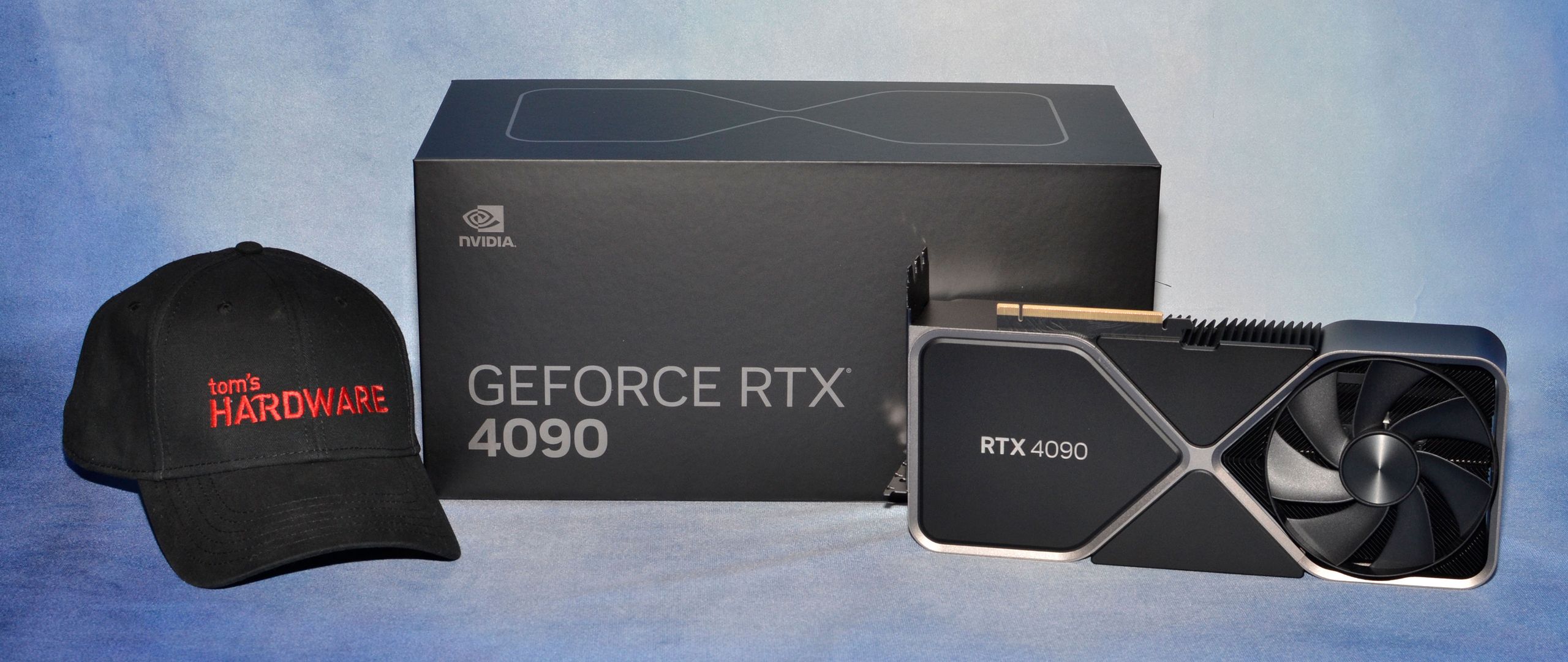
0.5% of gamers can afford the RTX 4090. It got Editor's Choice anyway.
The Original Review
“The RTX 4090 is the fastest GPU we've ever tested, delivering massive performance improvements in rasterization and ray tracing.”
Let me introduce a concept I call the Accessibility-Adjusted Score, or AAS. You take the review score, multiply it by the percentage of the target audience that can actually afford the product, and arrive at the score's real-world utility. Tom's Hardware gave the RTX 4090 a 4.5/5 with an Editor's Choice badge. The card launched at $1,599 MSRP and was nearly impossible to find below $1,800 for its first six months. According to the Steam Hardware Survey at the time, less than 0.5% of Steam users owned an RTX 4090 a year after launch. So: 4.5 times 0.005 gives us an AAS of 0.0225 out of 5. The math ain't mathing.
But let's set my made-up metric aside and look at the internal logic. Tom's Hardware docked half a point, landing at 4.5/5. The stated reasons: power consumption (450W TDP) and the price. Good, they acknowledged it. Now here is the problem. Their own review of the RTX 3080 — a card that delivered generational performance improvements at $699 — also received a 4.5/5 Editor's Choice. Same score. The 4090 costs 2.3 times more, consumes 50% more power, requires a PSU upgrade for most users, and physically does not fit in many cases. And it gets the same score. The 0.5 deduction for the 4090 apparently covers a $900 price increase, a 130W power increase, and a size problem. That is the most efficient half-point in reviewing history.
Here is what really bothers me about tech publication scoring: the Editor's Choice award. It is binary — you either get it or you don't. Tom's Hardware gave it to the RTX 4090, the RTX 4080, and the RTX 4070 Ti. Three cards across a $700 price range all received the same distinction. When everything is Editor's Choice, nothing is Editor's Choice. The badge has no discriminating power. It is a participation trophy for products that cost more than a month's rent.
I give this review a 3/10. Jarred Walton's benchmark methodology is genuinely thorough, and the technical analysis is competent. But a review that awards its highest editorial distinction to a product that 99.5% of its readership cannot reasonably buy is not consumer guidance — it is aspirational advertising. A useful tech review would score the product within its price segment, not against a platonic ideal of GPU performance. Until then, Editor's Choice means Editor's Wishlist.