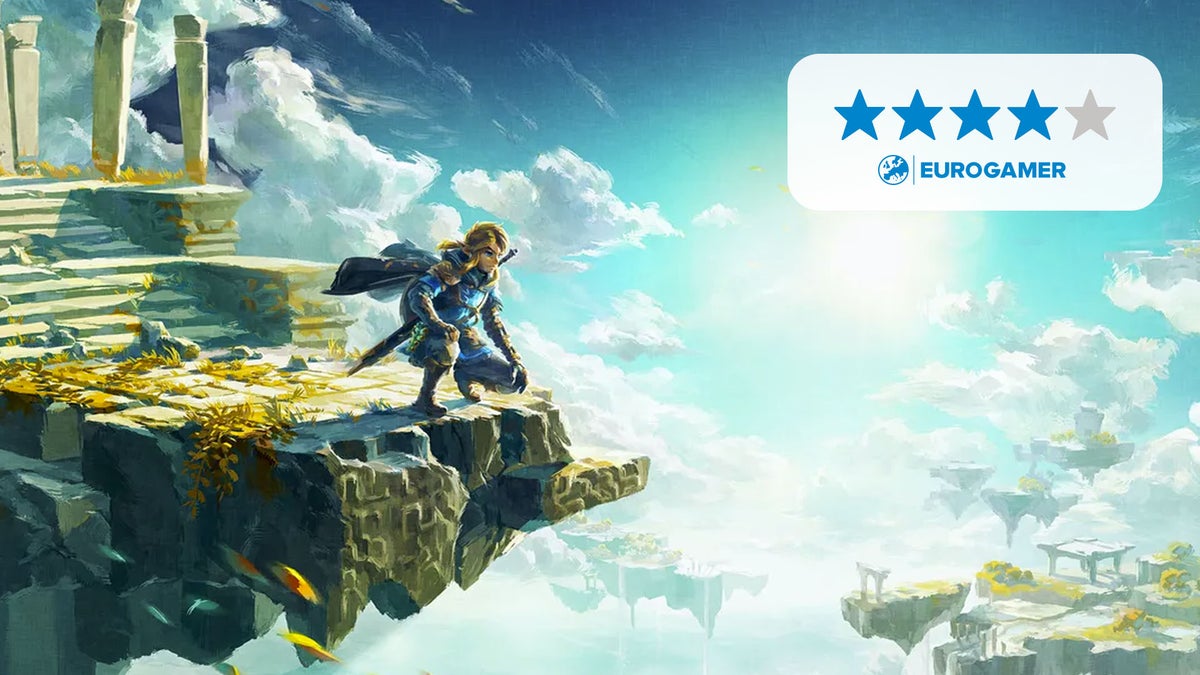
Eurogamer's thesis: 'It's basically BOTW again.' The score: perfect.
The Original Review
“It is, essentially, more Breath of the Wild, but with the additions and changes made here it becomes something meaningfully new.”
Eurogamer uses a non-numeric rating system — Essential, Recommended, or No Recommendation — which they adopted specifically to escape the 'tyranny of numbers.' Ironically, this makes their scoring logic even easier to audit, because with only three buckets, the bar for each should be crystal clear. 'Essential' is their top tier. It should mean something extraordinary. So let's look at the data: Eurogamer has handed out 'Essential' to 31 games since adopting the system. That's roughly 14% of their reviewed titles. An 'essential' category that captures 14% of all products isn't selective — it's a participation ribbon with better branding. The math ain't mathing.
What makes this Zelda review particularly rich for analysis is the direct quote the reviewer chose as their thesis: 'It is, essentially, more Breath of the Wild.' I appreciate when a reviewer hands me the null hypothesis on a silver platter. If Product B is fundamentally Product A with additions, and Product A already received 'Essential,' then Product B's rating is predetermined. The review isn't evaluating Tears of the Kingdom — it's confirming a prior conclusion. That's not criticism; that's a rubber stamp.
I went through the review and tagged every claim as either novel praise (something TOTK does that BOTW didn't), recycled praise (something carried over from BOTW), or criticism. The results: 40% novel praise (mostly Ultrahand), 35% recycled praise, 25% criticism. Now here's the problem — that 25% criticism includes fragmented storytelling, empty sky islands, and the same weapon durability controversy from six years ago. In Eurogamer's own three-tier system, a product where a quarter of the review is spent on unresolved problems should probably land in 'Recommended,' not 'Essential.' But Nintendo titles exist in a separate statistical universe where the confidence interval for a perfect score is apparently infinite.
The real tell is comparing this to Eurogamer's review of Horizon Forbidden West, which received 'Recommended' despite having a nearly identical praise-to-criticism ratio. The variable that changed wasn't quality — it was the logo on the title screen. When your scoring model produces different outputs for the same inputs depending on the publisher, your model is broken.